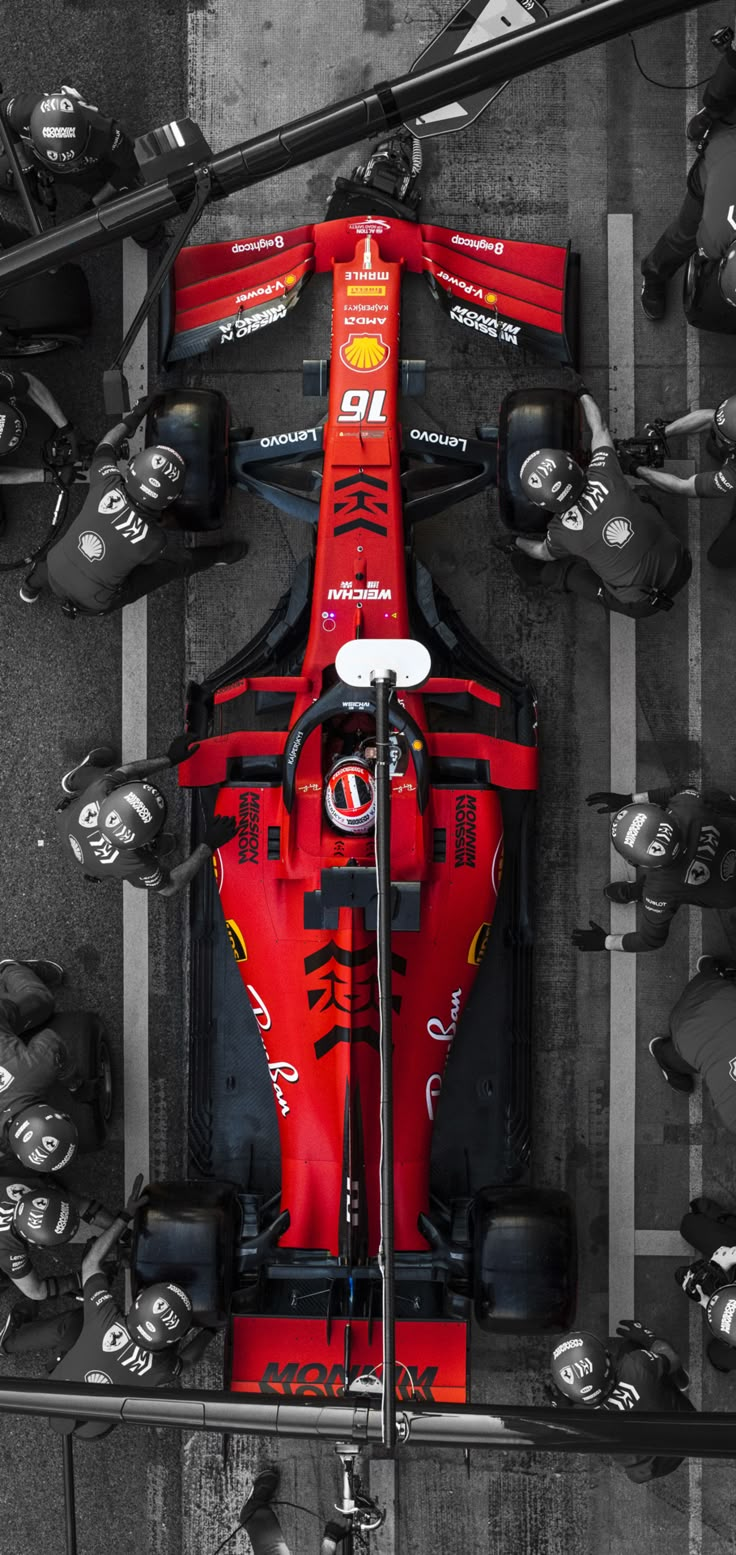
The goal of this project is to introduce you to F1 using a data driven approach. To get you acquainted with the athletes themselves, the strategies involved and the history of the sport in general.
Over the 75 years of the sport's existence, there have been unmissable crashes, revolutionary safety regulations, and iconic moments that have paved the way for the future of the sport. Here we can start our journey by showing you what happened when it happened, and how these events moulded the sport.
F1 as a sport started off in Europe, and over time spread to other nations that could afford to host races, and maintain tracks. We can see the fan base growing over the years as new tracks across the world come into play.

F1 is an ultimate test of a driver's skill and endurance but also, the team's strategy, cutting edge engineering, attention to detail and precision in crafting the car.
The global expansion and evolution of the sport also gave rise to a broad range of talented drivers. Moving from circuits to individuals, we use a bubble plot to represent all the drivers who have won at least one race in formula one throughout the history of the sport.
While drivers matter, so do the teams that build their cars. There are several constructor teams that develop the cars and hire drivers to race in them. Let's have a look at how drivers have performed throughout their careers under different constructors.
Eras of dominance are in no question when it comes to the sport. From the bright red legacy of Ferrari to the rise of a current powerhouse - Red Bull. Whether it be changes in regulation, engine upgrades and innovations, or race strategies involving pit stops, the constructors have a direct role in the performance of the car and the driver.
Certain constructors have an edge at certain times when they develop some new technology the others havent caught wind of just yet. Let's have a look at some of the constructors that have dominated the races, and also the drivers who drove the cars to victory!
When a great driver is matched with a team that has a great car, there are not many things that can stop them from dominating the season. Have a look at 5 of the most successful drivers in an era of your choice.
All the superstars we just highlighted had to have started somewhere. A driver that does well in his rookie season, is likely to become a household name. Let's have a look at our superstars rookie seasons!
Now one might imagine, with the technology improving every year, the cars would get faster. This is not the case in the sport anymore! Lets look into the fastest laps in a few selected circuits over the last 16 years.
Before each race, theres a qualifying session. Driver's are required to drive around the circuit and the faster their lap, the better their starting position is in the actual race. To illustrate this relationship, the upcoming violin plot displays the distribution of finishing positions for each starting spot.
Pit stops are an important part of Formula 1. Teams go through a lot of practice and effort, and they develop new techniques to perform pit stops as fast as they can. Lets have a look at the different constructor teams and how faster pit stops correlate with victories!
The difference between F1 and any other sport is that it is highly dangerous, the stakes are high, risks of crashing your car at incredibly high speeds will be there, a good chance of losing your life while competing.
As sad as it is, the evolution of safety in F1 has come with unfortunate human cost. With evolving safety regulations and technologies, the sport is significantly safer now, and fatalities are a rare occurence in recent decades.
Along the way, F1 has only proceeded to break barriers, technological, physical, and human. It's learned from its lowest moments, grown through regulatory reforms and innovation, and set the bar for motorsport worldwide. And as the sport speeds into the future with hybrid engines, global expansion, and sophisticated technology, one thing doesn't change: it's still the raw mix of speed, precision, and adrenaline.